
IFRS & Accounting
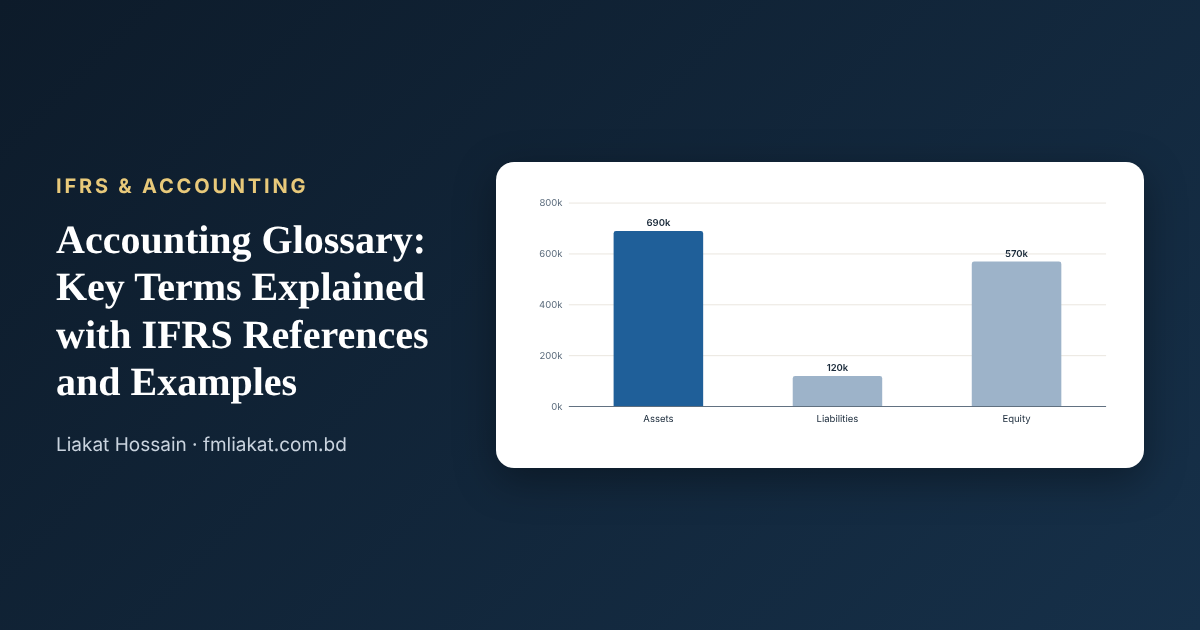
Accounting Glossary: Key Terms with IFRS References
The foundation vocabulary of accounting — defined in plain English, linked to IFRS, illustrated with examples and tested with practice questions.
Read the full insight →Home / Insights
Practical, original articles for finance professionals: IFRS and accounting standards, FP&A, cash and working capital, costing, ERP and controls, with worked examples and anonymized project case studies.
No articles match your search. Try a shorter word such as “IFRS”, “cash” or “SAP”.
The foundation vocabulary of accounting — defined in plain English, linked to IFRS, illustrated with examples and tested with practice questions.
Read the full insight →
One body of standards, two numbering series — a complete reference to every IFRS # and IAS #, what is in force and what replaced what.
Read the full insight →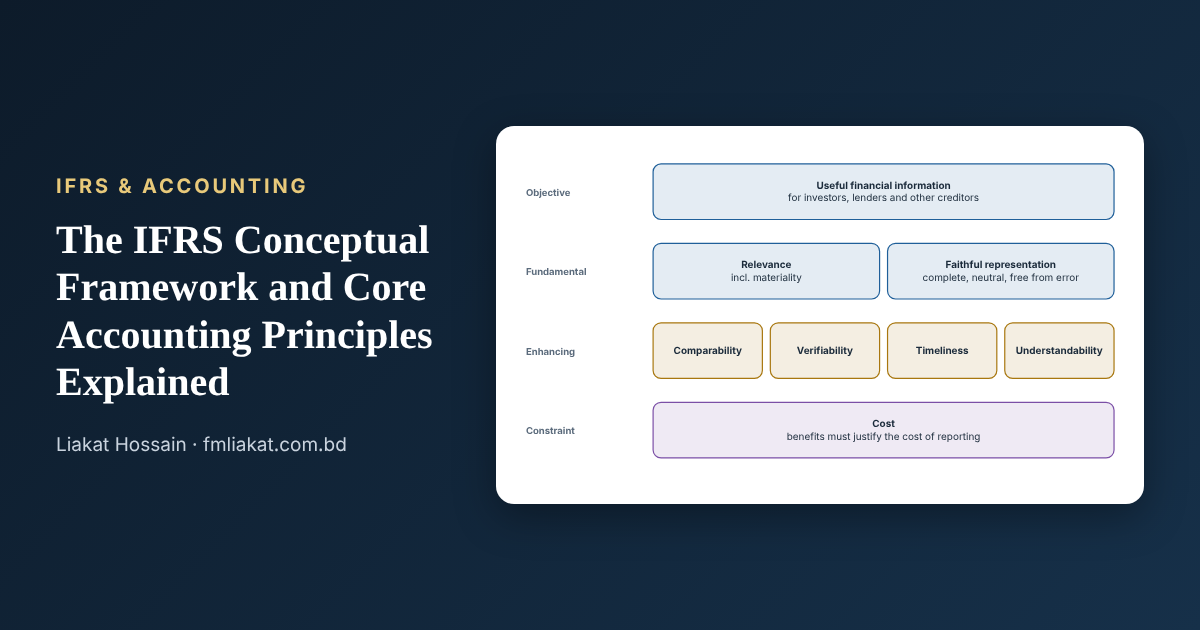
The ideas behind every IFRS — objective, qualitative characteristics, the five elements, recognition and measurement — and how classic accounting principles fit in.
Read the full insight →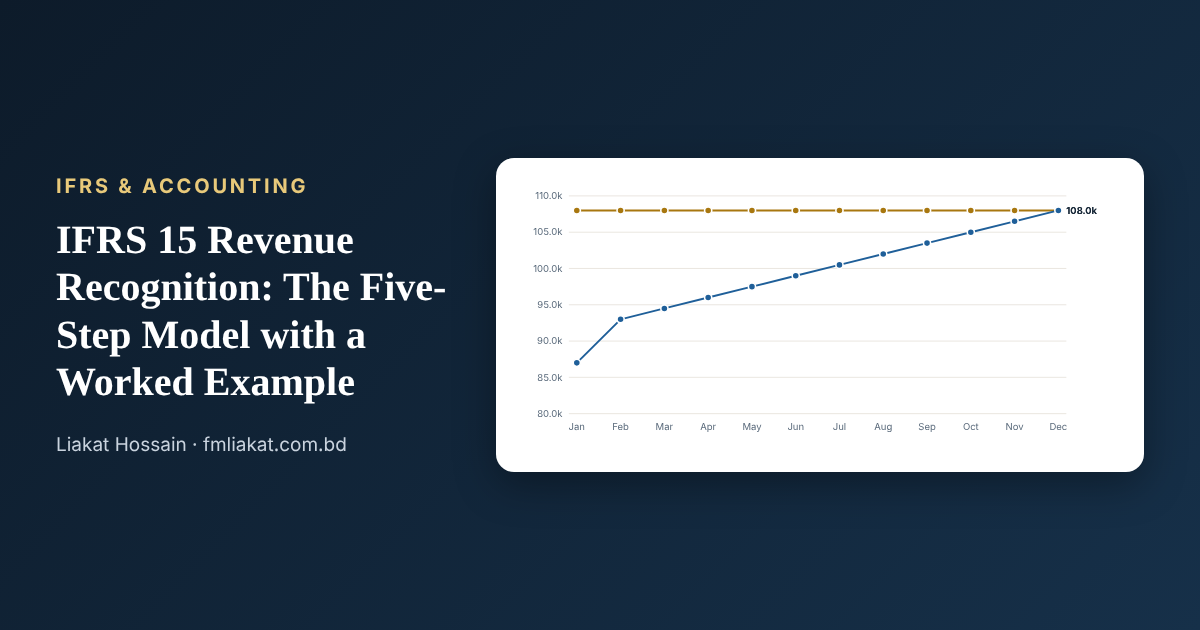
A practical walk-through of IFRS 15 — from identifying the contract to recognising revenue — with a bundled-contract example and contract-liability chart.
Read the full insight →
How lessees account for leases under IFRS 16 — with a five-year worked schedule, the front-loaded expense profile and the effect on EBITDA and debt.
Read the full insight →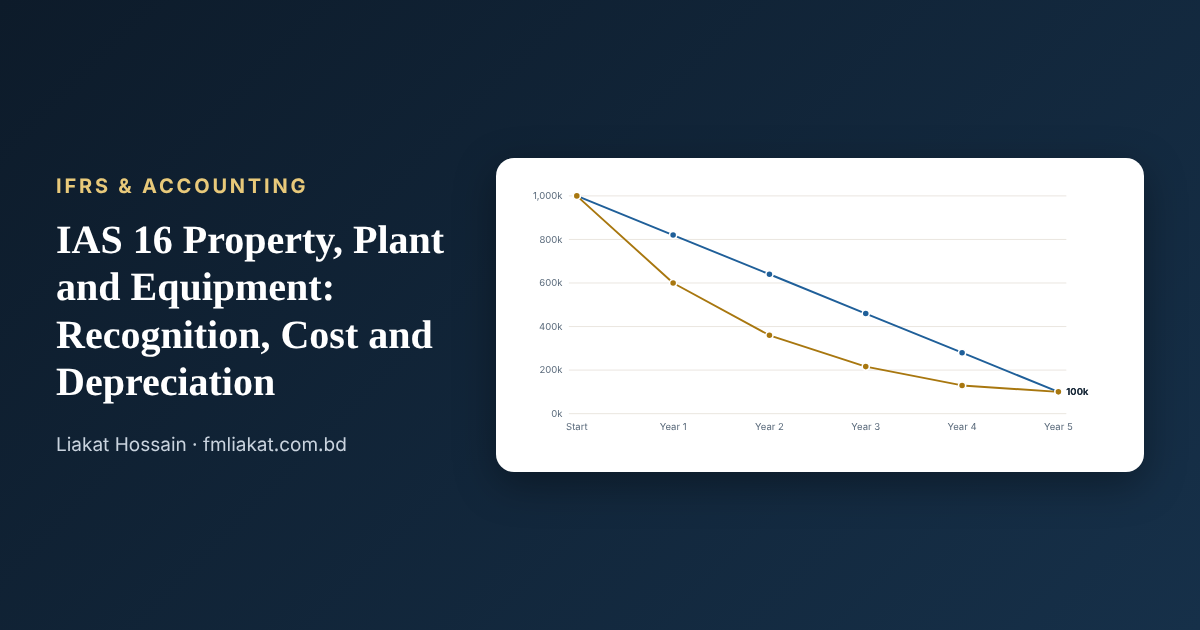
The full life cycle of fixed assets under IAS 16 — what to capitalise, how to depreciate and how to keep the asset register audit-ready — with a depreciation comparison chart.
Read the full insight →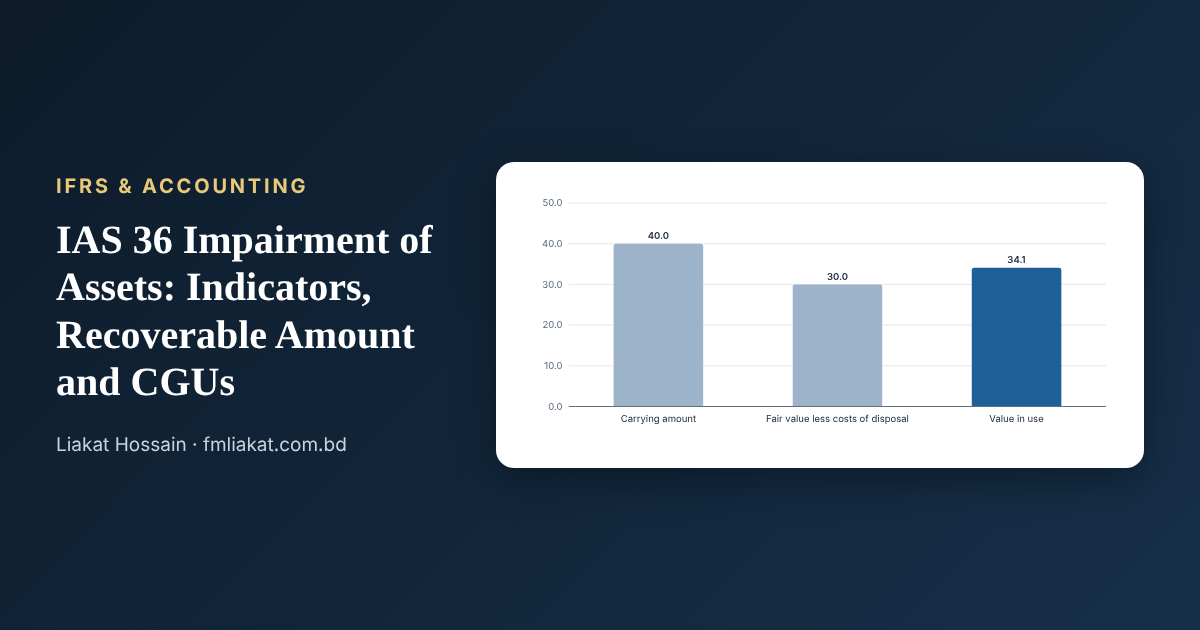
How to test assets and cash-generating units for impairment under IAS 36 — with a worked value-in-use calculation and loss allocation.
Read the full insight →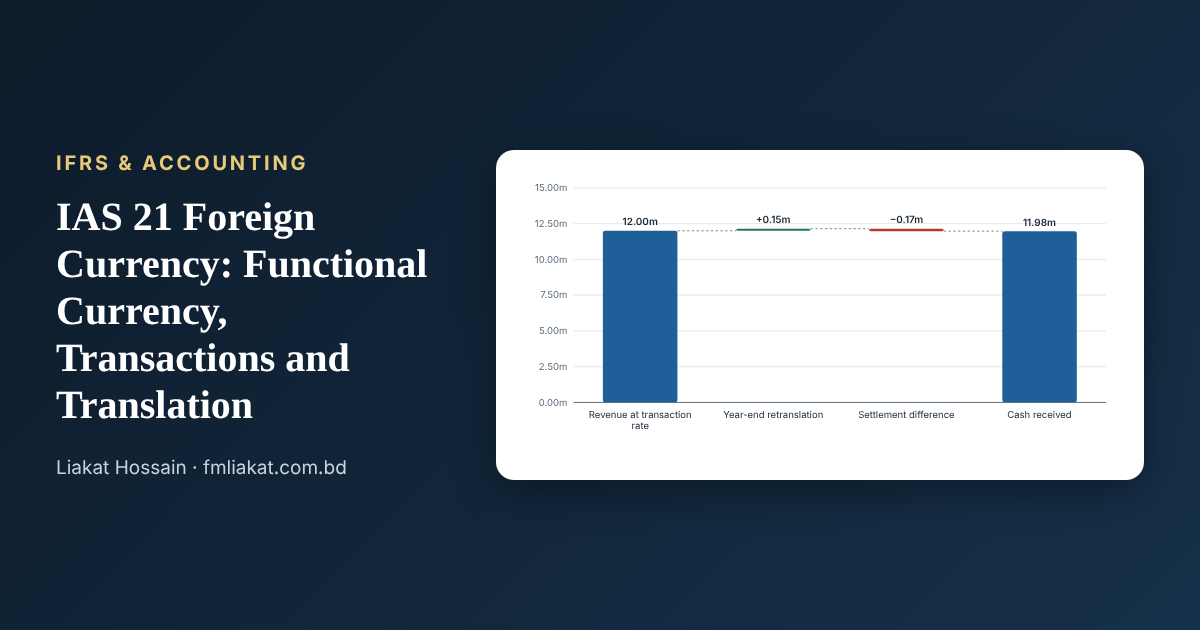
How to account for USD sales, purchases and loans under IAS 21 — with a worked export-receivable example and a guide to translating foreign subsidiaries.
Read the full insight →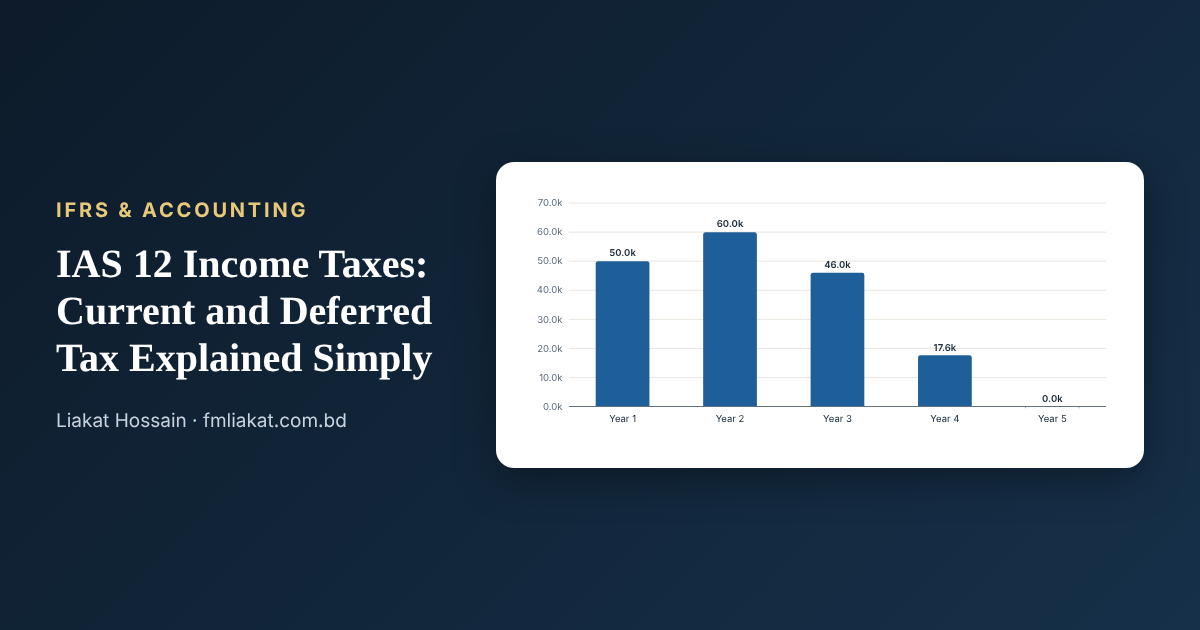
A step-by-step guide to deferred tax under IAS 12, with a worked example of accelerated tax depreciation and a practical working-paper approach.
Read the full insight →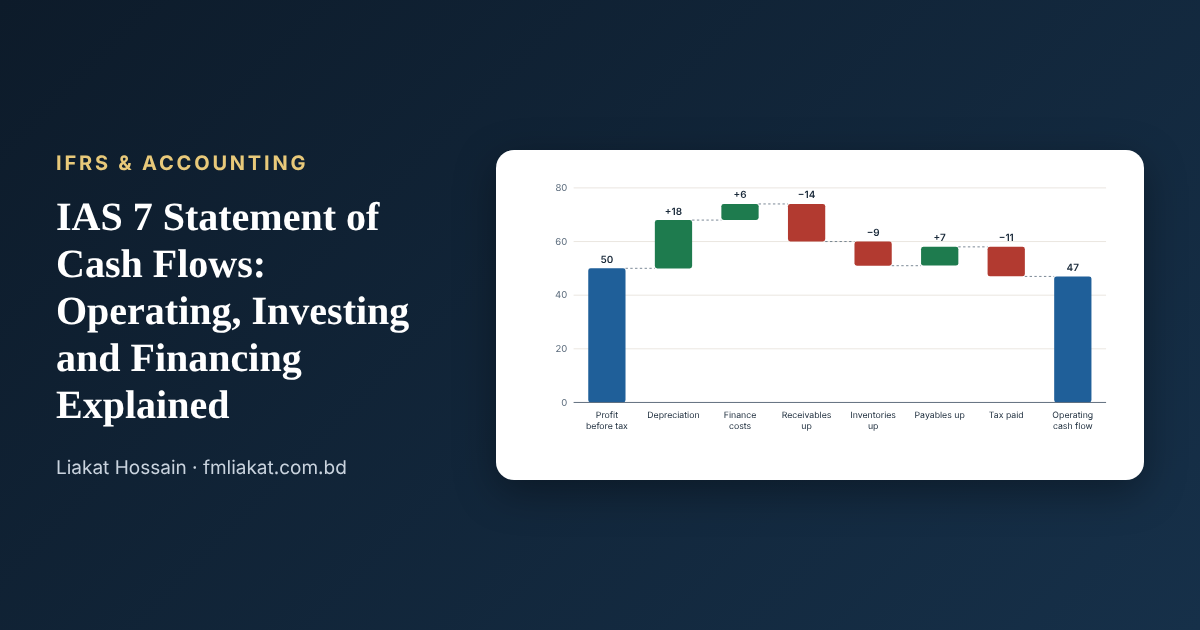
How to prepare and read a statement of cash flows under IAS 7 — with an indirect-method waterfall from profit to operating cash and the coming IFRS 18 changes.
Read the full insight →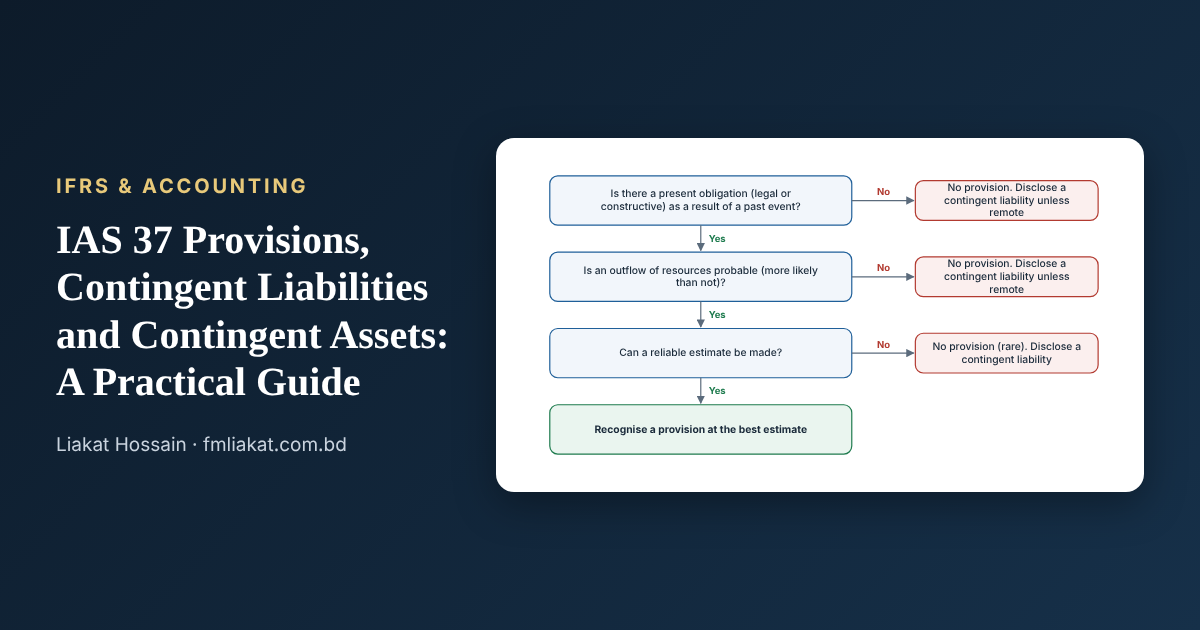
When to provide, how much to provide and what to disclose under IAS 37 — with a decision flowchart and a worked warranty provision.
Read the full insight →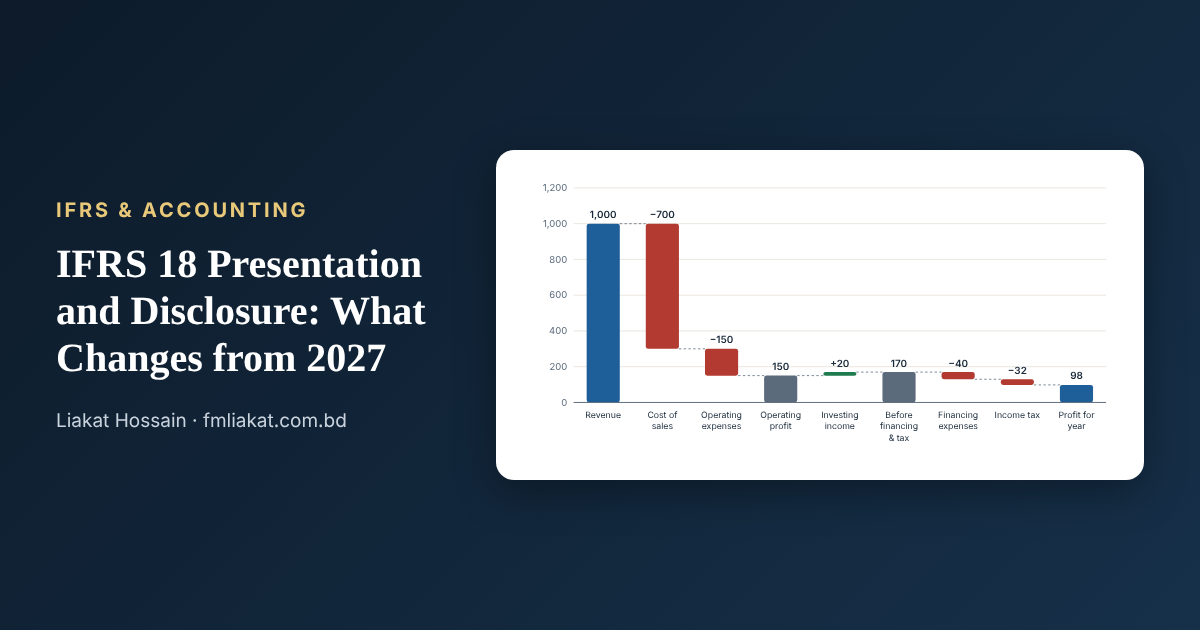
The new income statement from 2027 — categories, subtotals, management-defined performance measures and how finance teams should prepare.
Read the full insight →
A practical method for turning “actual minus budget” into a profit bridge, a price–volume–mix analysis and commentary that leadership can act on.
Read the full insight →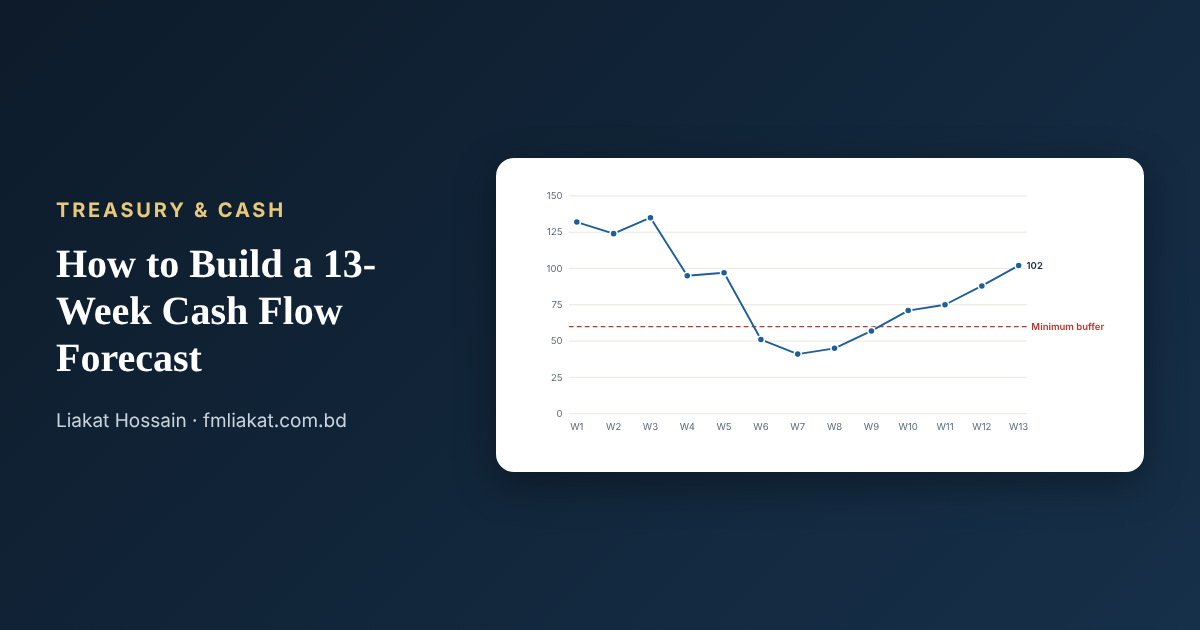
A practical, direct-method weekly forecast that gives leadership early warning of cash pressure — with a worked example and a weekly operating rhythm.
Read the full insight →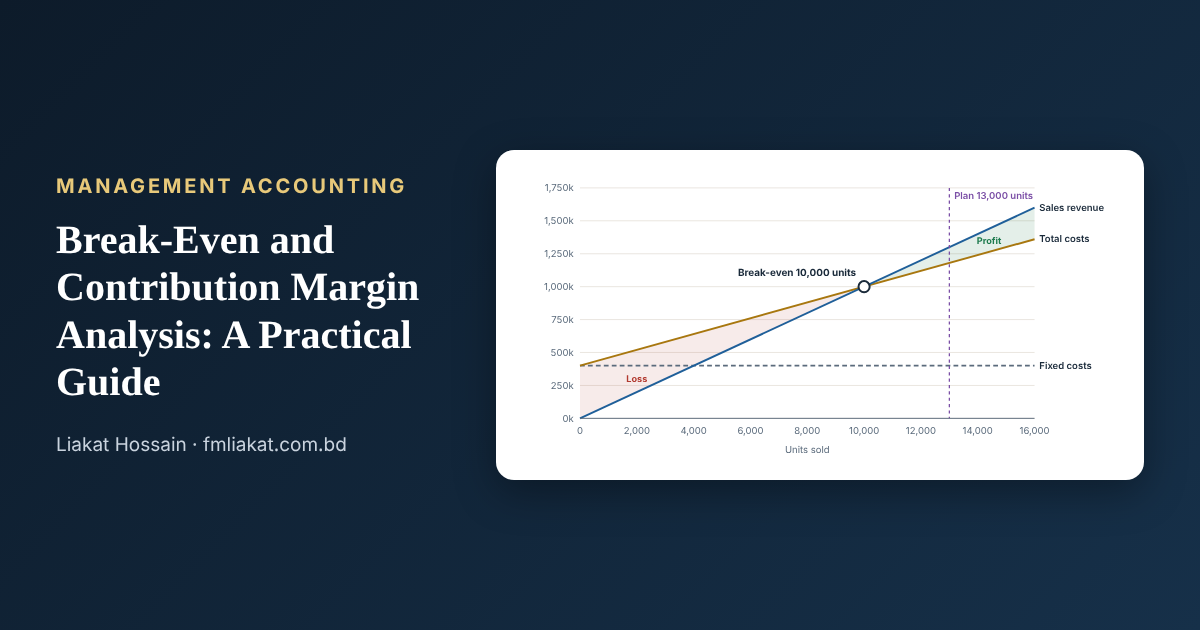
How to use cost–volume–profit analysis to answer everyday pricing, volume and investment questions — with a worked example, a CVP chart and a sensitivity test.
Read the full insight →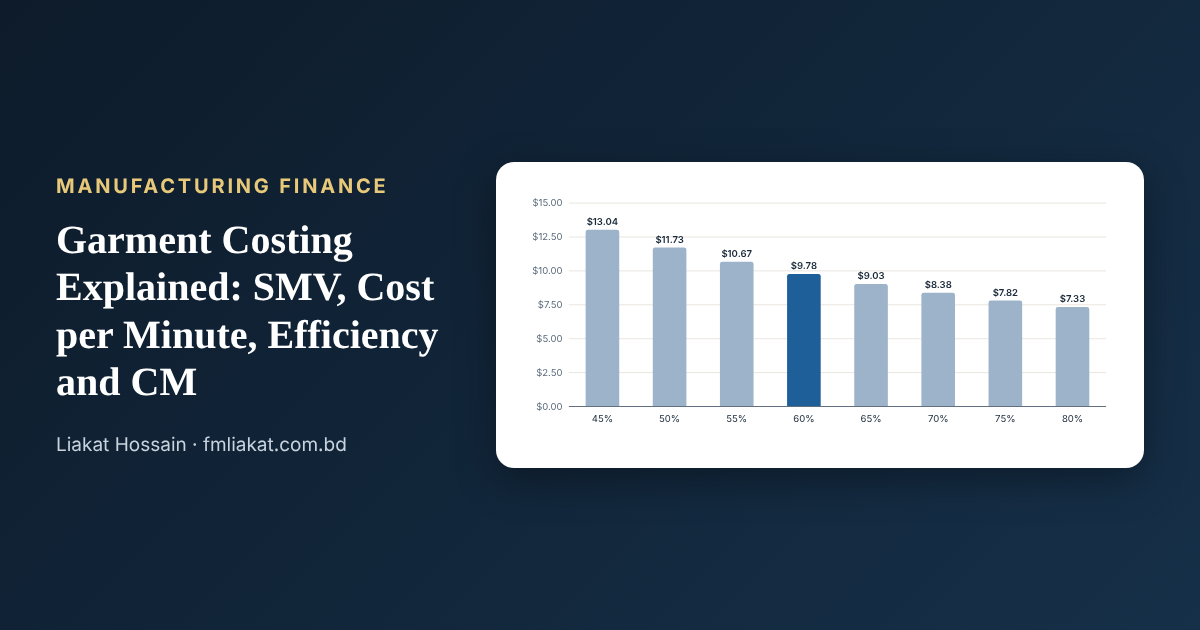
A finance view of apparel costing in Bangladesh’s RMG sector — how SMV, cost per minute and line efficiency determine the cost of making and the FOB price.
Read the full insight →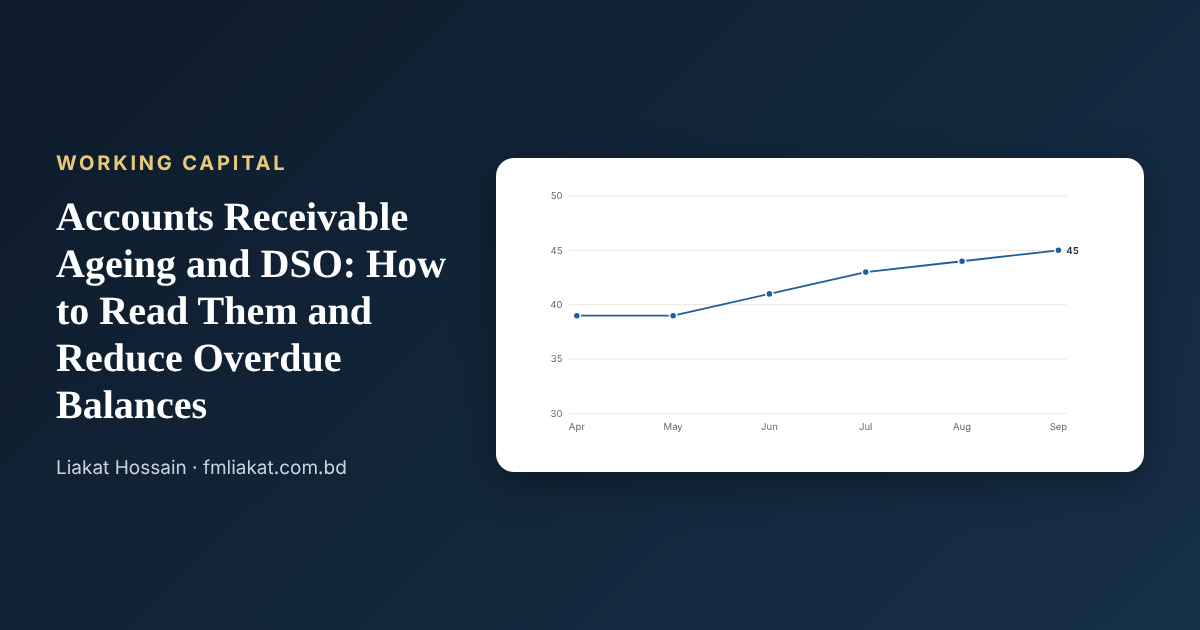
DSO tells you how long cash is tied up; the ageing report shows where the risk is. Here is how to use both — with charts, a collections process and an ECL matrix.
Read the full insight →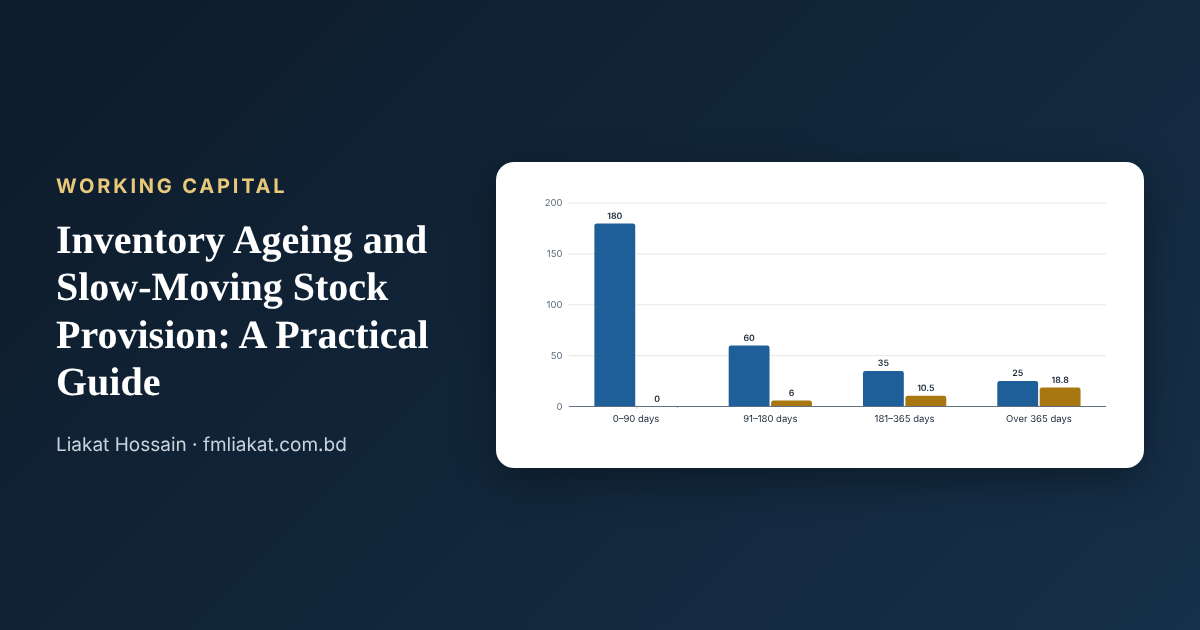
How to use an inventory ageing analysis to value stock correctly under IAS 2, track days inventory outstanding and turn slow-moving items back into cash.
Read the full insight →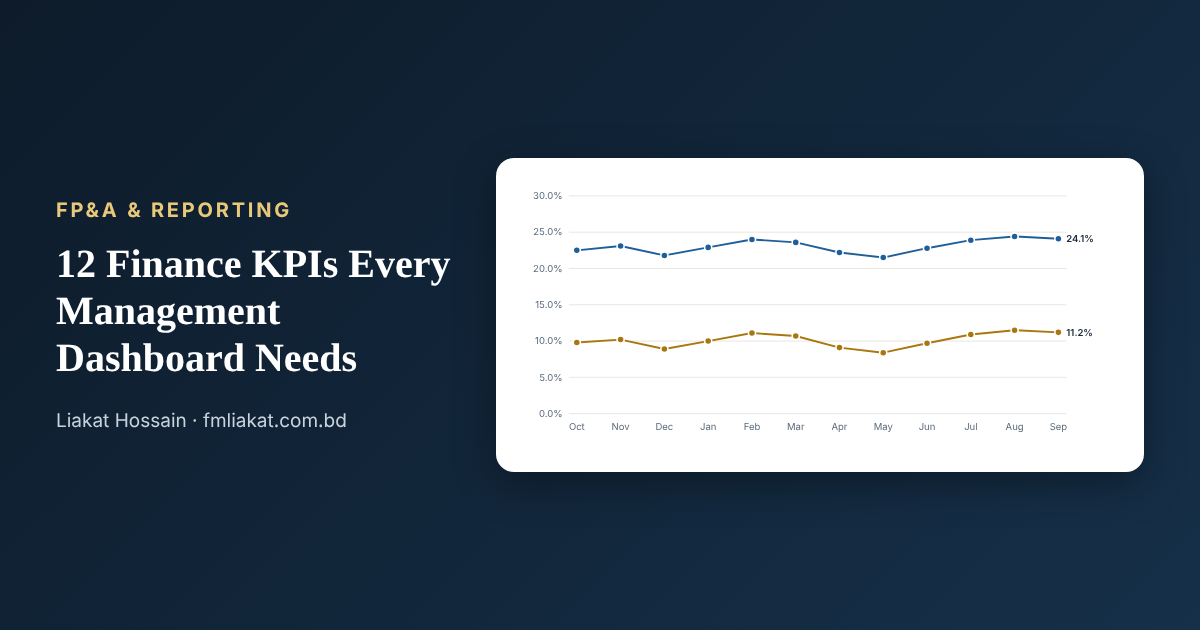
A practical KPI set for leadership: twelve measures grouped into four questions, with formulas, charts, design principles and governance.
Read the full insight →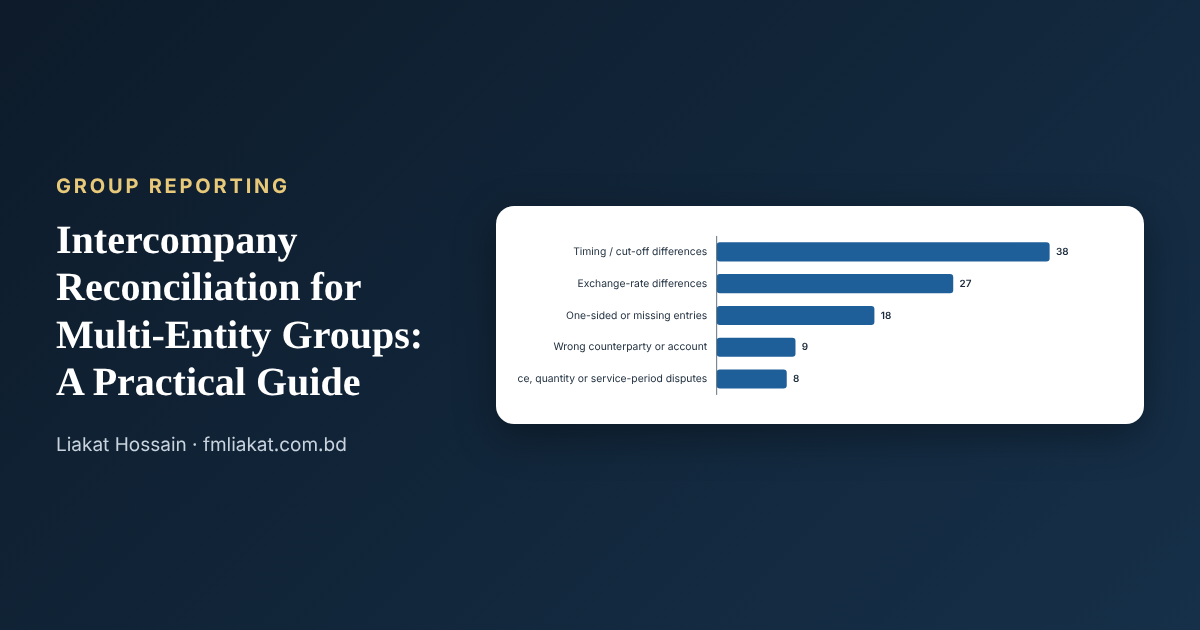
Why intercompany balances don’t agree, and a practical policy, calendar and matching process to fix it — with root-cause and trend charts.
Read the full insight →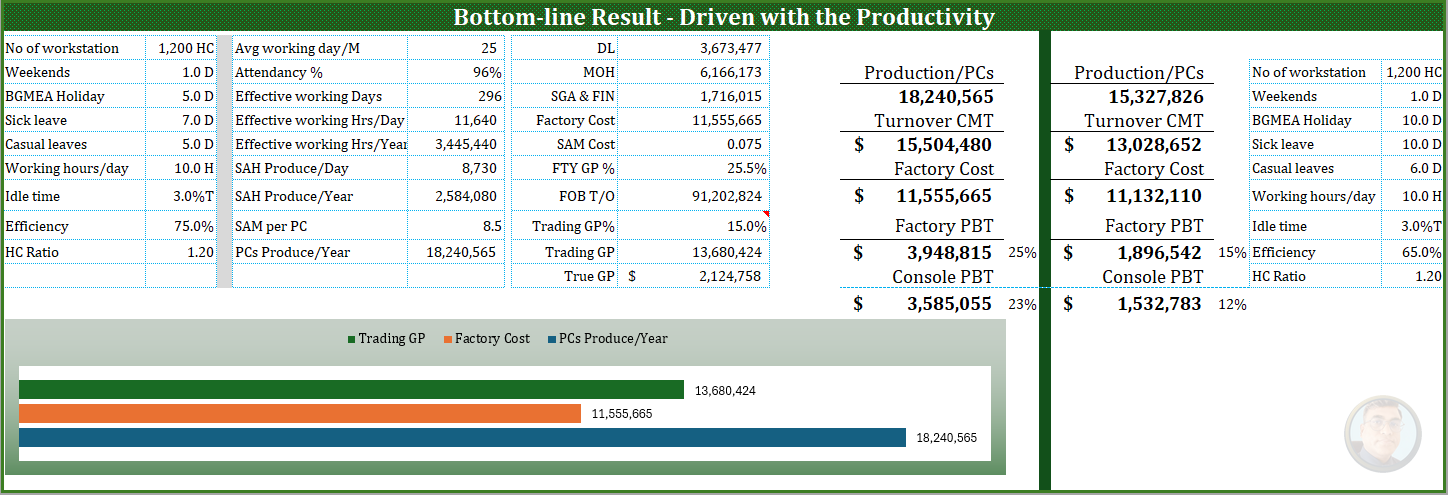
A real-project model connecting attendance, efficiency, capacity, output, turnover and profit.
Read the full insight →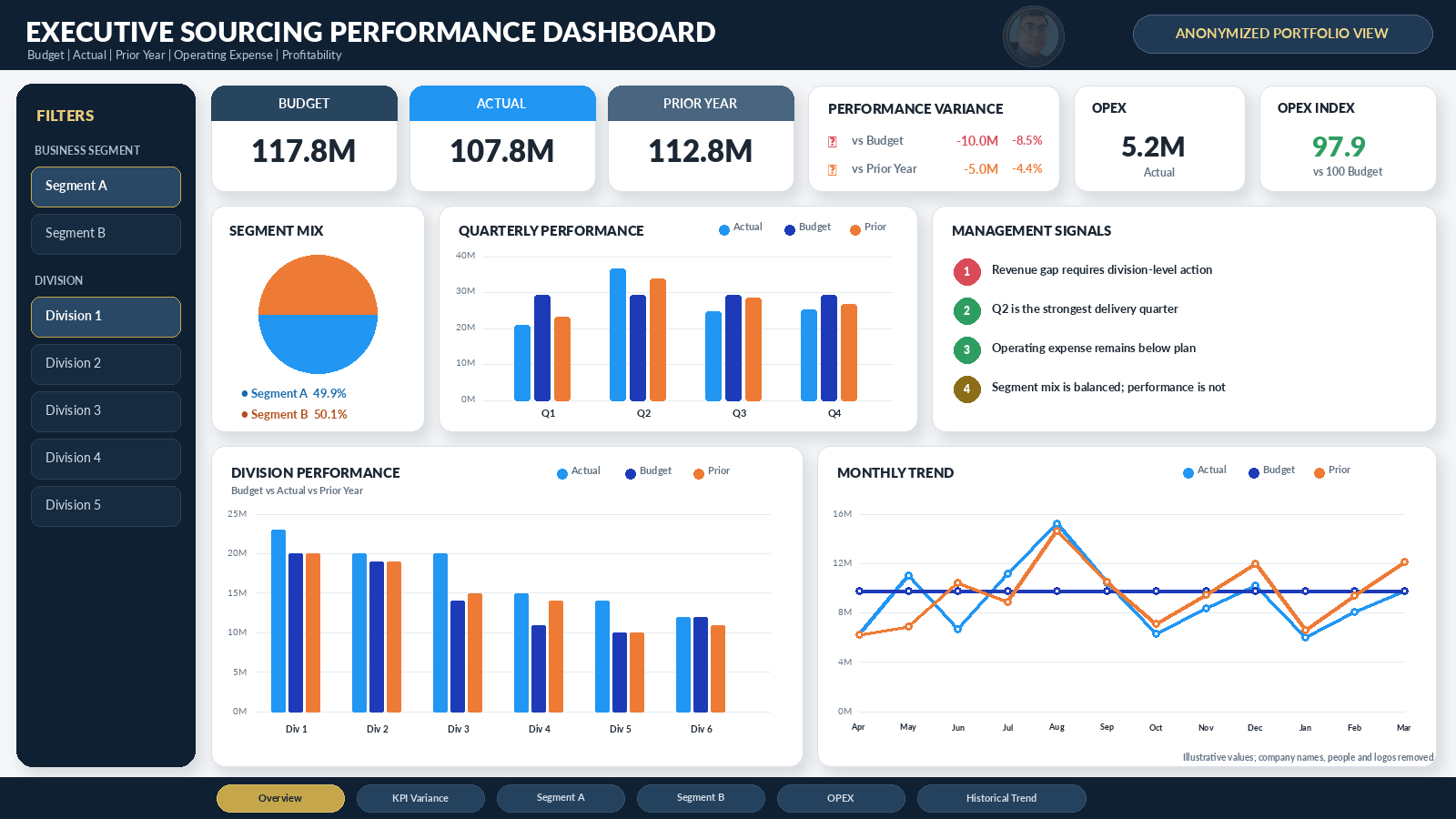
An anonymized management dashboard case study covering budget, actual, prior year, OPEX and profitability.
Read the full insight →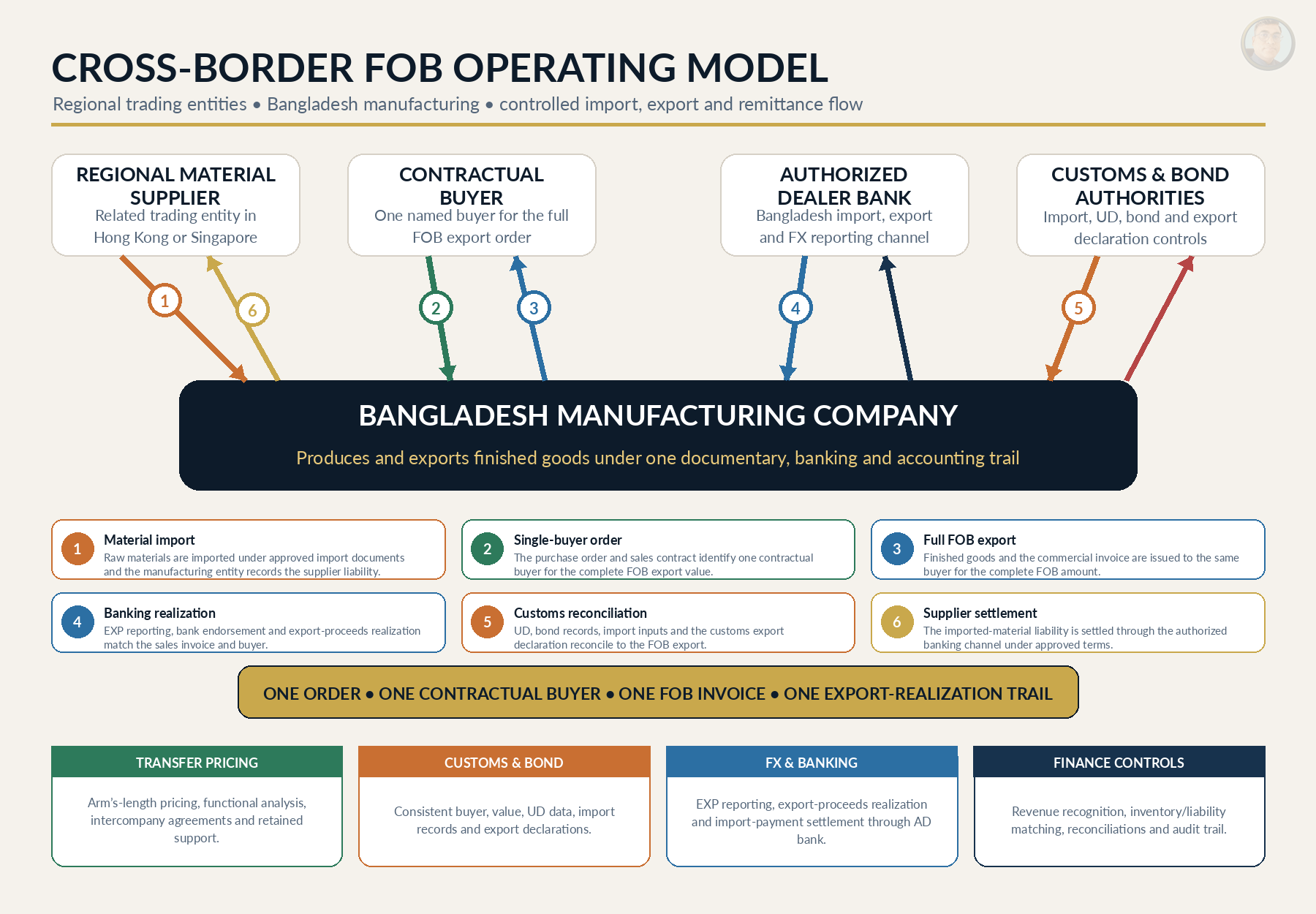
An anonymized operating model for trading entities and Bangladesh manufacturing, import, export and remittance.
Read the full insight →
Operational assumptions, integrated financial statements, scenarios and forecast governance.
Read the full insight →
A controlled multi-entity close framework covering cut-off, reconciliations, intercompany and review.
Read the full insight →
Finance controls for design, roles, master data, migration, testing, cutover and stabilization.
Read the full insight →
Vendor, purchasing, receipt, invoice, payment and data-analytics risks.
Read the full insight →
Receivables, inventory, payables, cash opportunity and cross-functional action.
Read the full insight →This section contains original long-form finance articles and anonymized case studies written for finance professionals, business managers, students and recruiters who want practical explanations rather than generic definitions. The focus is on how financial information connects to operations, controls, systems and management decisions.
The articles cover recurring professional problems: IFRS and core accounting standards (IFRS 15, IFRS 16, IFRS 18, IAS 7, IAS 12, IAS 16, IAS 21, IAS 36, IAS 37), faster and better-controlled month-end closing, variance analysis, cash forecasting, break-even analysis, garment costing, receivables and inventory management, finance KPIs, intercompany reconciliation, stronger procure-to-pay controls, driver-based planning, working-capital improvement, SAP FICO implementation governance, management reporting in Power BI, workforce productivity economics and cross-border operating models. Each article explains the business context, the decision logic, practical control points and the management information needed to act.
Where an article draws on professional project experience, identifying information is removed. Company names, customers, suppliers and confidential figures are not published unless they are already public or have been deliberately generalized. The objective is to preserve the transferable finance logic without disclosing private business information.
Articles are reviewed for clarity, internal consistency and scope before publication. Technical standards, laws and tax rules can change, so readers should verify current requirements with the relevant authority or professional adviser before using an article for a regulated decision. The Editorial Policy explains the site's approach to authorship, corrections and responsible use of sources.
The goal is not to publish a large number of short posts. The site favors fewer, more substantial pages that answer a complete professional question. Examples include control checklists, decision frameworks, financial relationships, dashboard design logic and implementation risks. Related articles are cross-linked so a reader can move from a business problem to the associated reporting, system or control topic.
For example, a working-capital discussion is connected to receivables, inventory and payables actions; a Power BI dashboard article explains how management views should connect budget, actual and profitability measures; and the SAP FICO article emphasizes governance around master data, migration, access and cutover rather than presenting SAP as only a software configuration exercise.
Material changes are reflected through page updates, and substantive corrections are made when an error is identified. The site does not publish copied article libraries, scraped summaries, automatically generated directories or pages created only to display advertising. The public sitemap is intentionally limited to pages with a clear purpose and original publisher content.
Articles are developed from professional finance practice, project work and structured analysis rather than copied summaries.
Client, employer, customer and supplier identities are removed where a case study is based on real work.
Content is reviewed for clarity, accuracy, scope and appropriate professional disclaimers before publication.